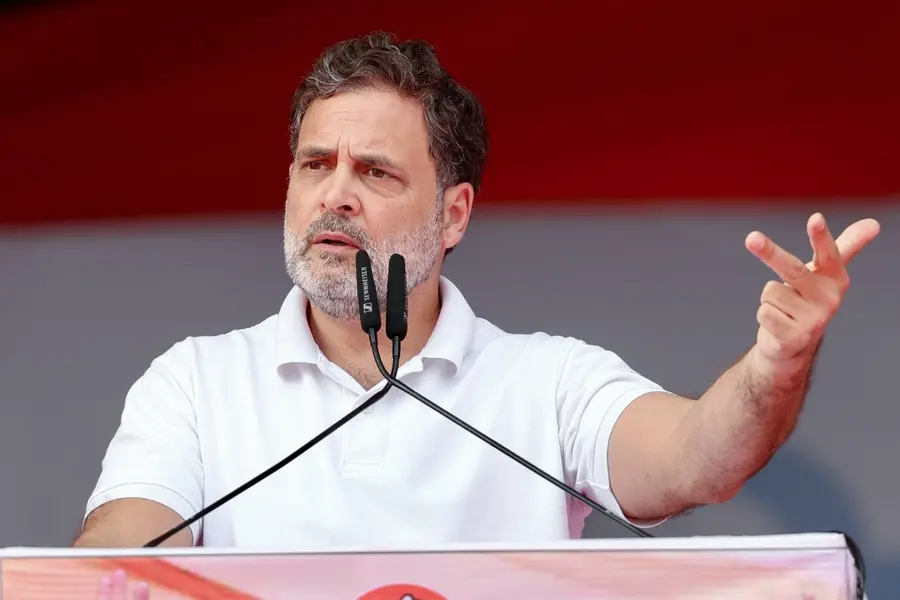




Leader of Opposition Rahul Gandhi on Monday raised concerns over India’s data sovereignty, accusing the Centre of lacking transparency in its negotiations with the United States on digital trade.
Speaking about the ongoing discussions around the India-U.S. trade framework, Gandhi said India’s data belongs to its people and should be used as a strategic asset to build artificial intelligence capabilities, create jobs, and strengthen the domestic tech ecosystem.
In a post, he questioned what “reducing barriers” in digital trade with the U.S. would mean for India’s data policies. He asked whether sensitive data such as health records, financial information, and government databases would continue to be stored within the country, and whether India would retain the authority to enforce data localisation rules on foreign companies.
Gandhi criticised the government’s responses, saying key concerns around data protection, AI regulation, and digital sovereignty were being addressed with vague terms like “framework” and “balance,” without concrete details. He alleged that the government was not being transparent about what it might be conceding in negotiations.
He further emphasised that India should be leading the global technology race but instead remains uncertain about how its data will be protected. Stressing accountability, he said citizens deserve clarity on how their data is being handled and safeguarded.
Earlier, during a Lok Sabha session, Gandhi had formally raised these questions with the Ministry of Electronics and Information Technology, seeking clarity on how India’s commitments under the proposed trade agreement align with existing data localisation and regulatory frameworks.
Responding to these concerns, Minister of State Jitin Prasada highlighted India’s strong IT sector, which recorded revenues exceeding $280 billion and exports of $225 billion in FY 2024–25. He said digital trade remains a crucial component of the economy, employing over 60 lakh people.
Prasada stated that India is committed to expanding digital trade partnerships globally and has already signed agreements with countries including the United Arab Emirates, United Kingdom, and European Union, each containing dedicated digital trade provisions.
He assured that India has safeguarded its regulatory autonomy in all agreements and that ongoing negotiations with the U.S. aim to create a fair and balanced digital trade environment. According to the government, these frameworks do not restrict India’s ability to regulate its own data or enforce domestic data governance laws.
The debate highlights growing concerns over data ownership, digital sovereignty, and India’s position in the evolving global AI and technology landscape.






.jpg)
.jpg)



.jpeg)



.jpg)
.jpg)
.jpg)
.jpg)
.jpg)
.jpg)
.jpg)
.jpg)
.jpg)
.jpg)
.jpg)
.jpg)
.jpg)





.jpg)